The College Cookbook is a project about easy meals for hard working college students who are constantly navigating the ramen college experience. The main focus of this collaborative project was on the design research, with the layouts as a prototype example from that research. Collaborated with designers Aidan Wallace, and Vinnie Verde.
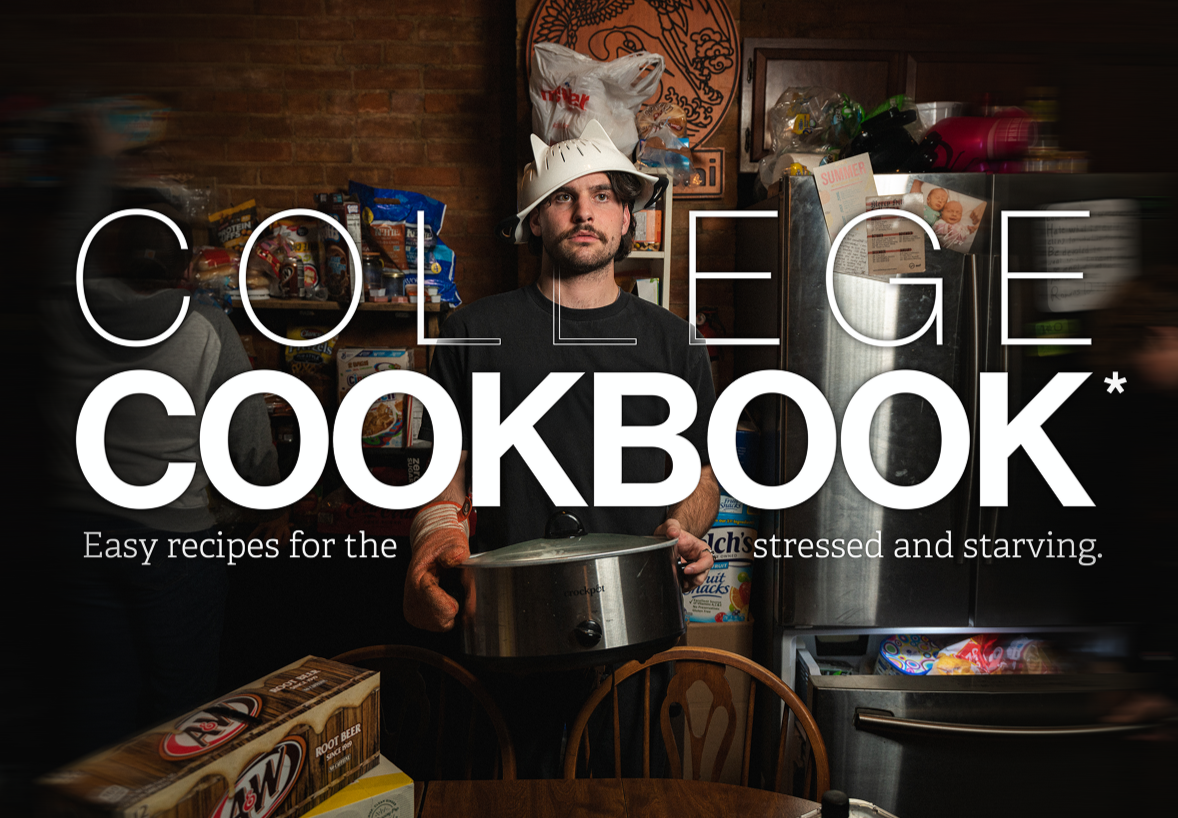
BRINGING THE BASICS
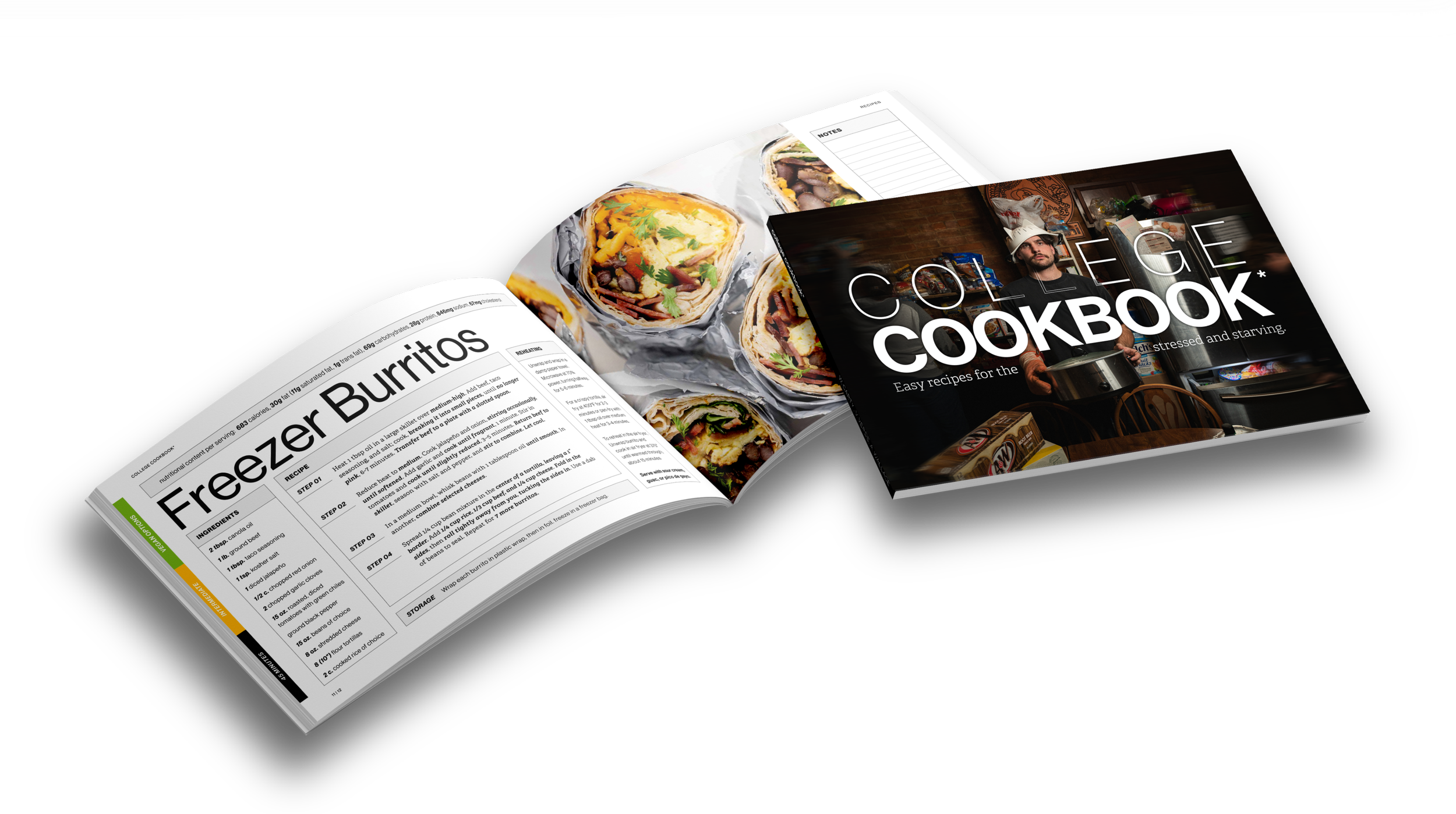
The College Cookbook is the average college student’s perfect cooking companion. With sections for both foundational cooking skills and long-lasting recipes, the College Cookbook provides a compact, efficient & approachable avenue for students to develop an affordable & consistent diet.
BREATHER SPREADS
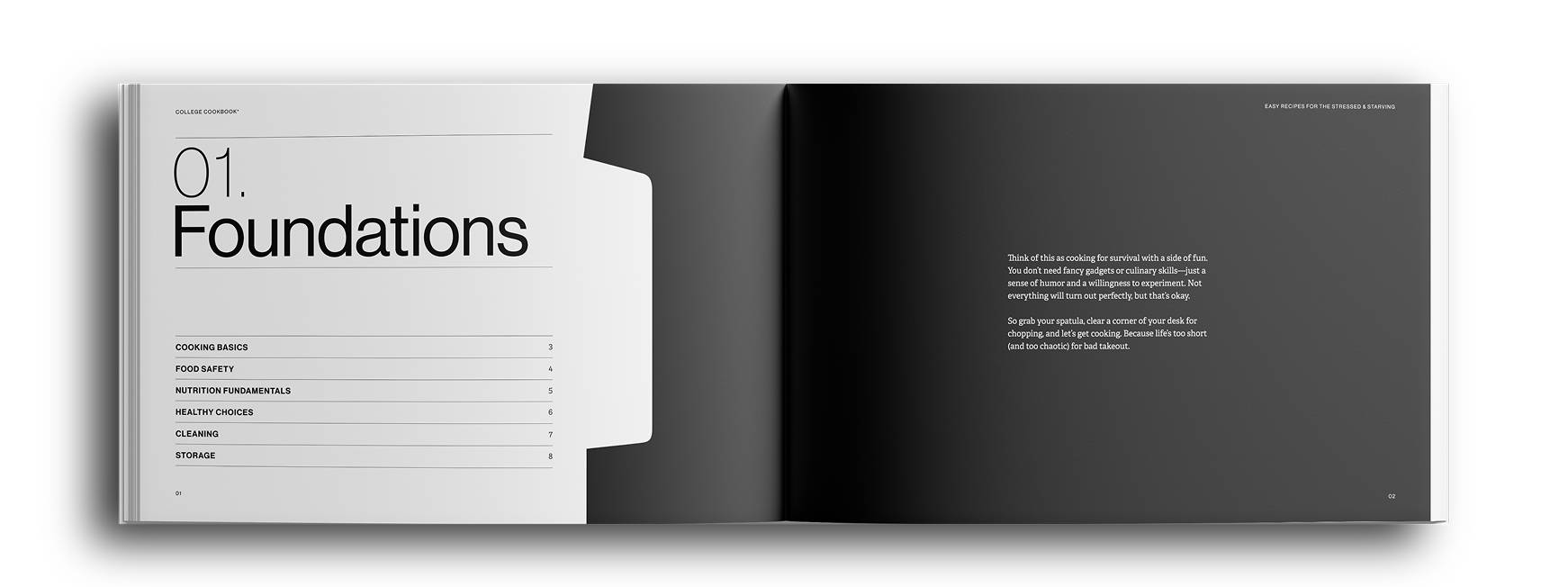
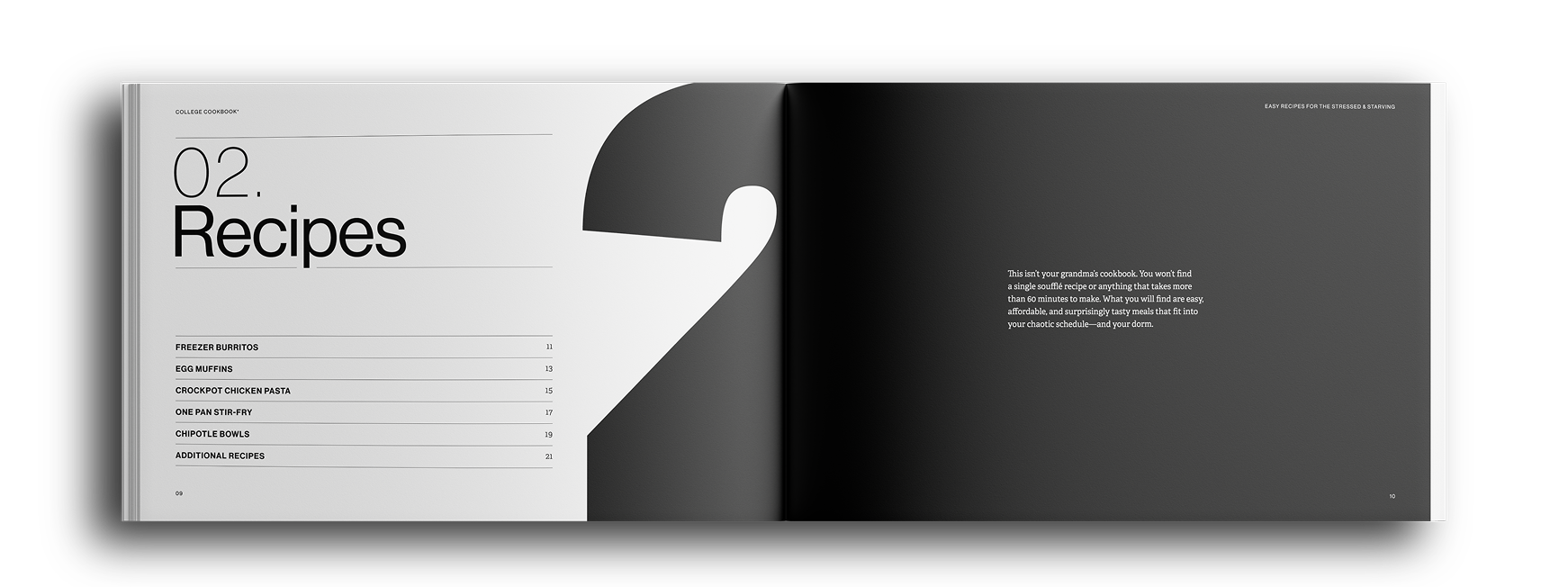
These spreads act as both a brief introduction to the chapter’s content & a table of contents for its sections.
FOUNDATIONS
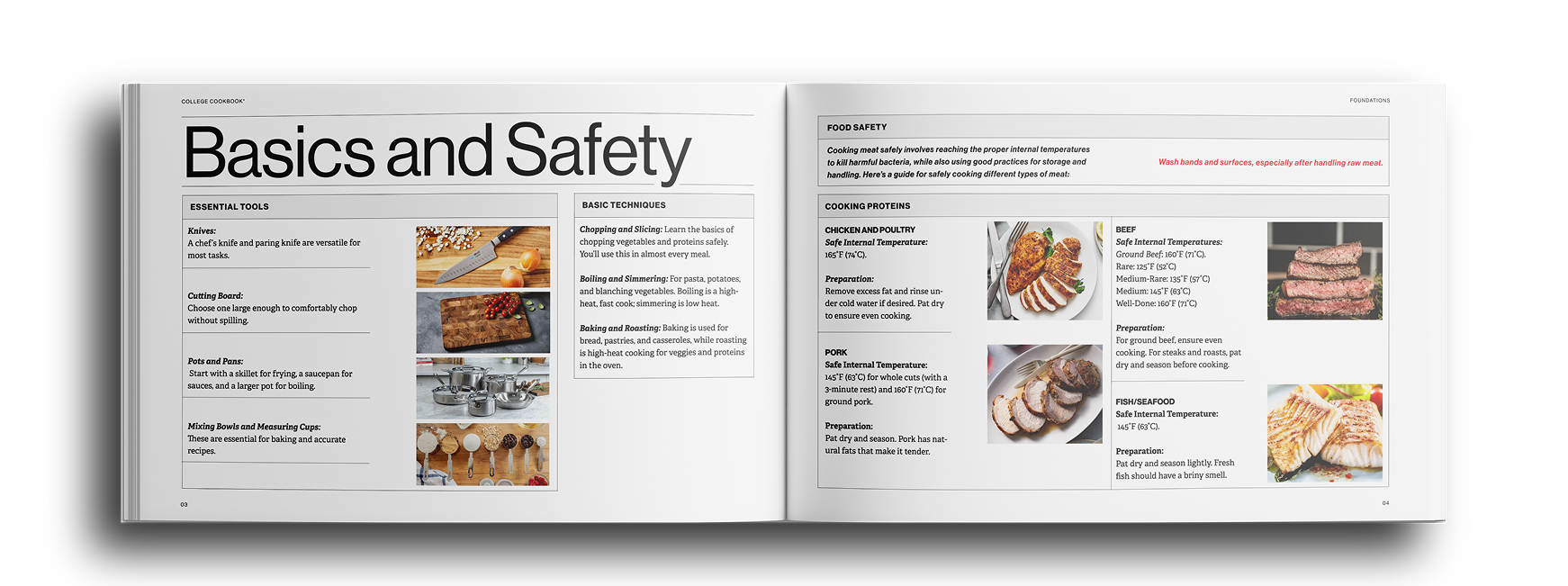
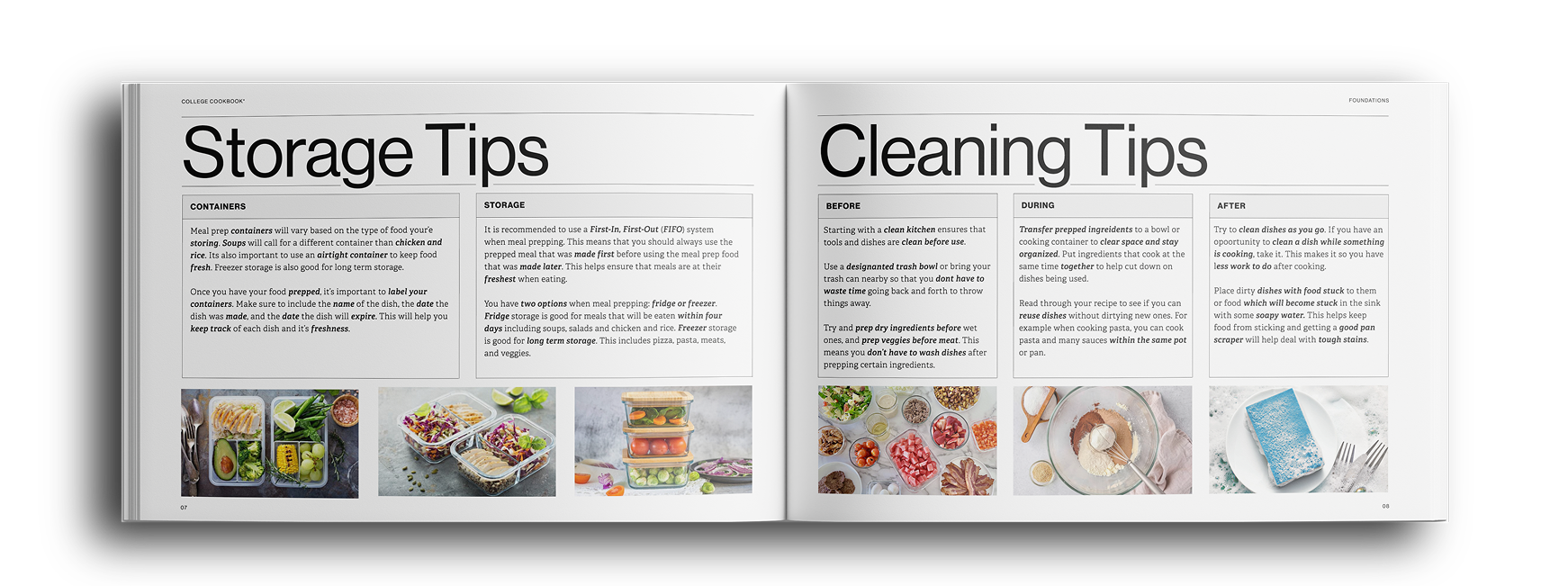
These sections briefly introduce the reader to essential cooking concepts in a simple, digestible format.
RECIPES
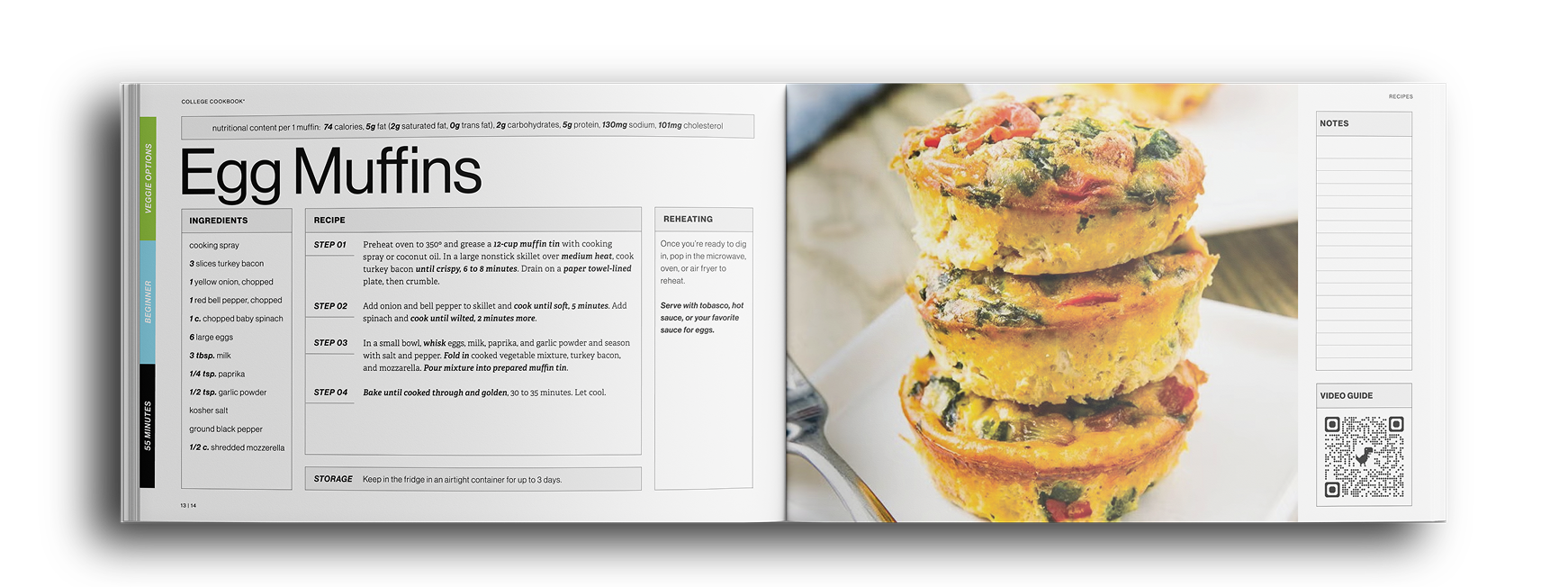
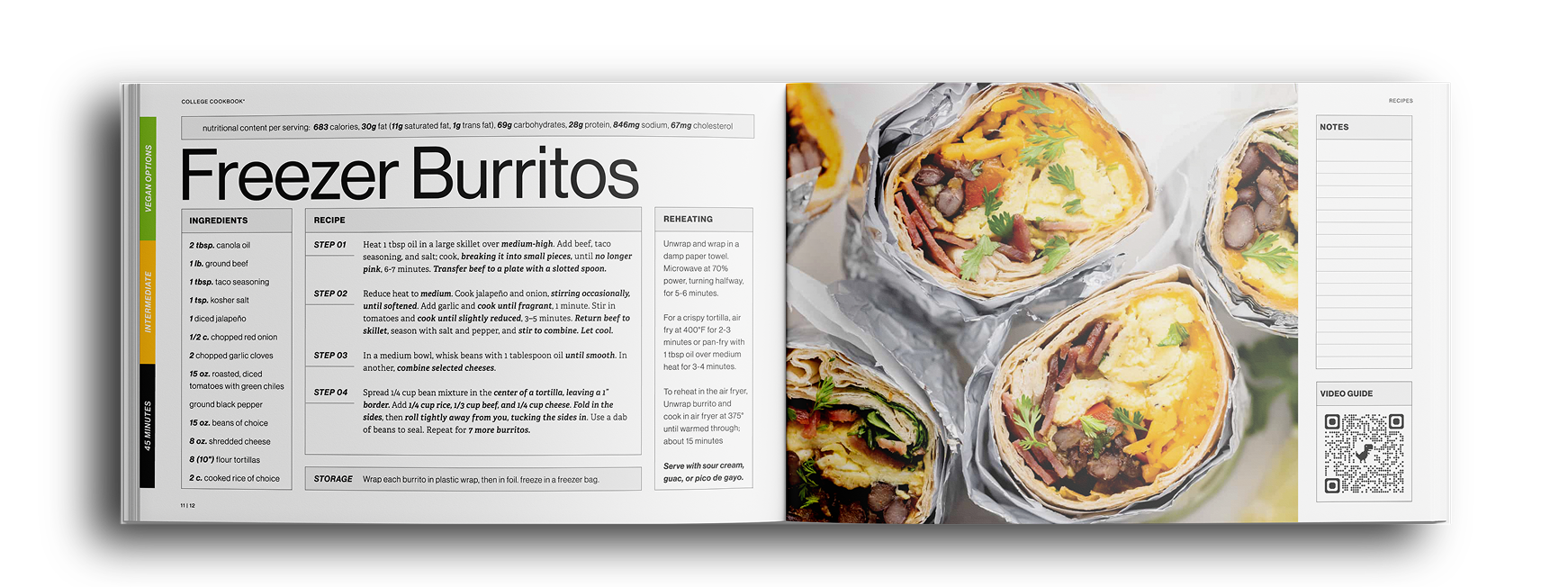
The “meat and potatoes” of the cookbook. This section walks users through making simple, cheap, multi-portion dishes to keep for the week.
PROBLEM SPACE
Student Nutrition
PROBLEM STATEMENT
Many students develop poor eating habits due to time constraints, high stress levels, limited cooking knowledge and restricted budgets. These habits lead to nutrient deficiencies that can negatively affect physical, mental, and emotional health.
PROJECT DEFINITION
Though it may seem overwhelming to some, meal prepping can be a remedy to many of the listed stressors. This project is a cookbook that guides students through the basics of cooking efficiently and prepping affordable, nutritious meals so that they may see the benefits of a more consistent diet in their daily lives.
PROJECT CRITERIA
The cookbook must be flexible to fit each student’s dietary needs, accounting for restrictions, preferred foods, and goals.
The cookbook must inform students on cooking fundamentals, best practices, and time/cost efficiency.
The cookbook must be accessible for beginner cooks and provide feasible recipe options for their skill level.
The cookbook must promote healthy habits and setting realistic health goals in a digestible, encouraging way.
THE STUDENT HEALTH CRISIS
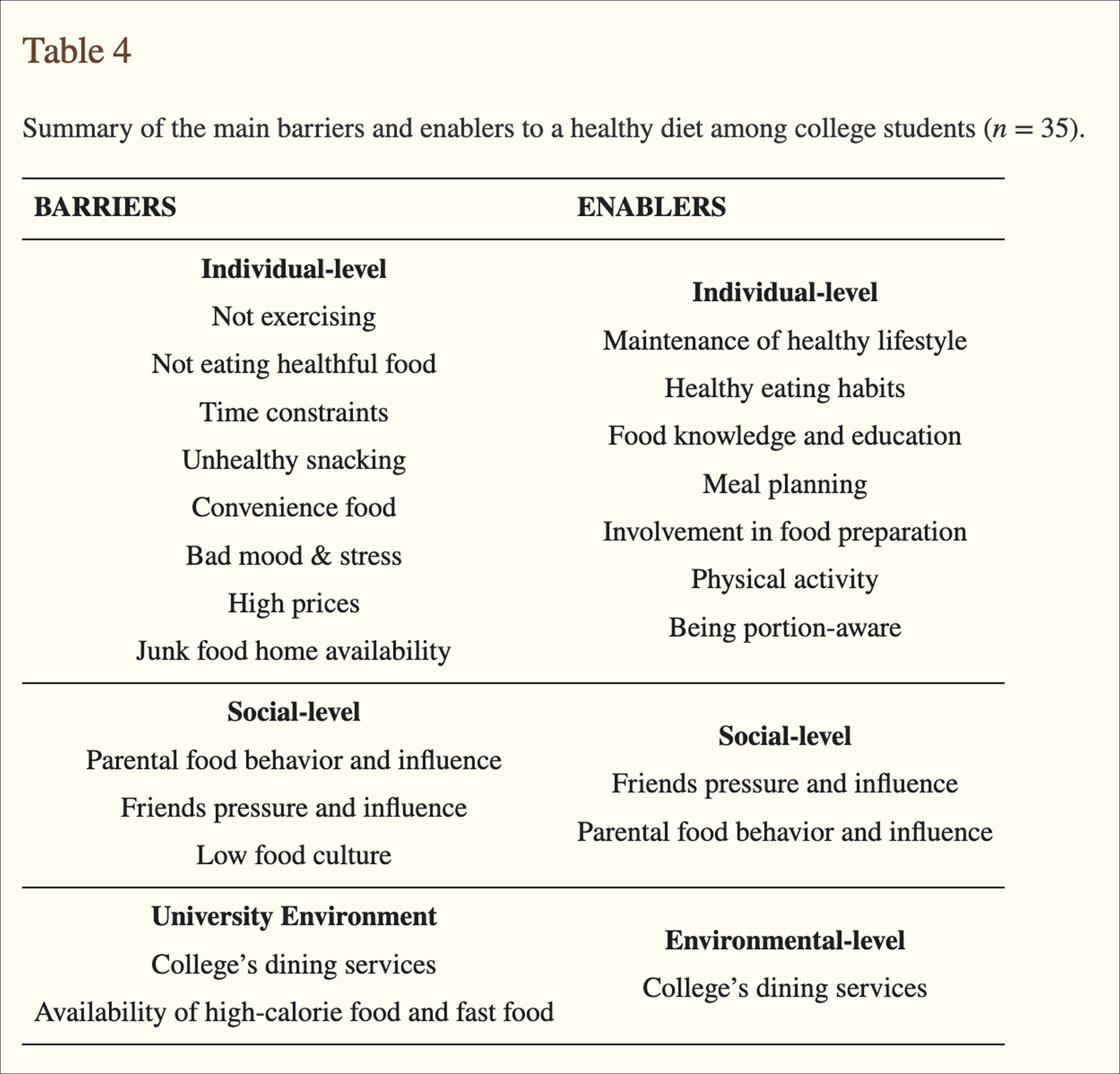
Research supports the notion that college students are largely malnourished for a variety of reasons. These reasons, or barriers, exist on three major levels: individual, social, and environmental. Some of these barriers, like time constraints, stress, social pressure, and the availability of junk/fast food, have possible solutions to them. Solutions like meal planning, proper food knowledge and proper food preparation can combat many of these barriers.

TARGET AUDIENCE
Our target audience is primarily young adults, specifically college students who are struggling with poor consistency in their diet.
BIO
Christian is a 22 year old UC student who is looking to improve his health. He is often busy with classwork and a part-time job, making it difficult to learn how to cook and take care of his diet. He also lives with roommates, which limits his freedom to cook when he wants. Christian is looking for a simple and efficient resource that can give him the help he needs.
PERSONALITY
pragmatic, go-getter, intuitive, busybody, independent
GOALS
improve overall health
improve diet/diet consistency
save time & money
FRUSTRATIONS
“I want to make food at home, but I don’t have the time.”
“It’s hard to work around my roommates and their schedules.”
“I want to save money on food, but I don’t know how to start.”
“I don’t have the time to learn how to cook properly.”
FORMAT’S FOUND IN RESEARCH
Dry Erase Board Food Schedule
Meal Planning Apps
Meal Prepping labels
WHAT ARE WE LOOKING FOR
How would students interact with our nutrition information?
Time is a heavy constraint when it comes to student nutrition, how will they implement our info into their schedules?
How do we have students maintain consistency with their nutrition?
COOKBOOK FORMAT
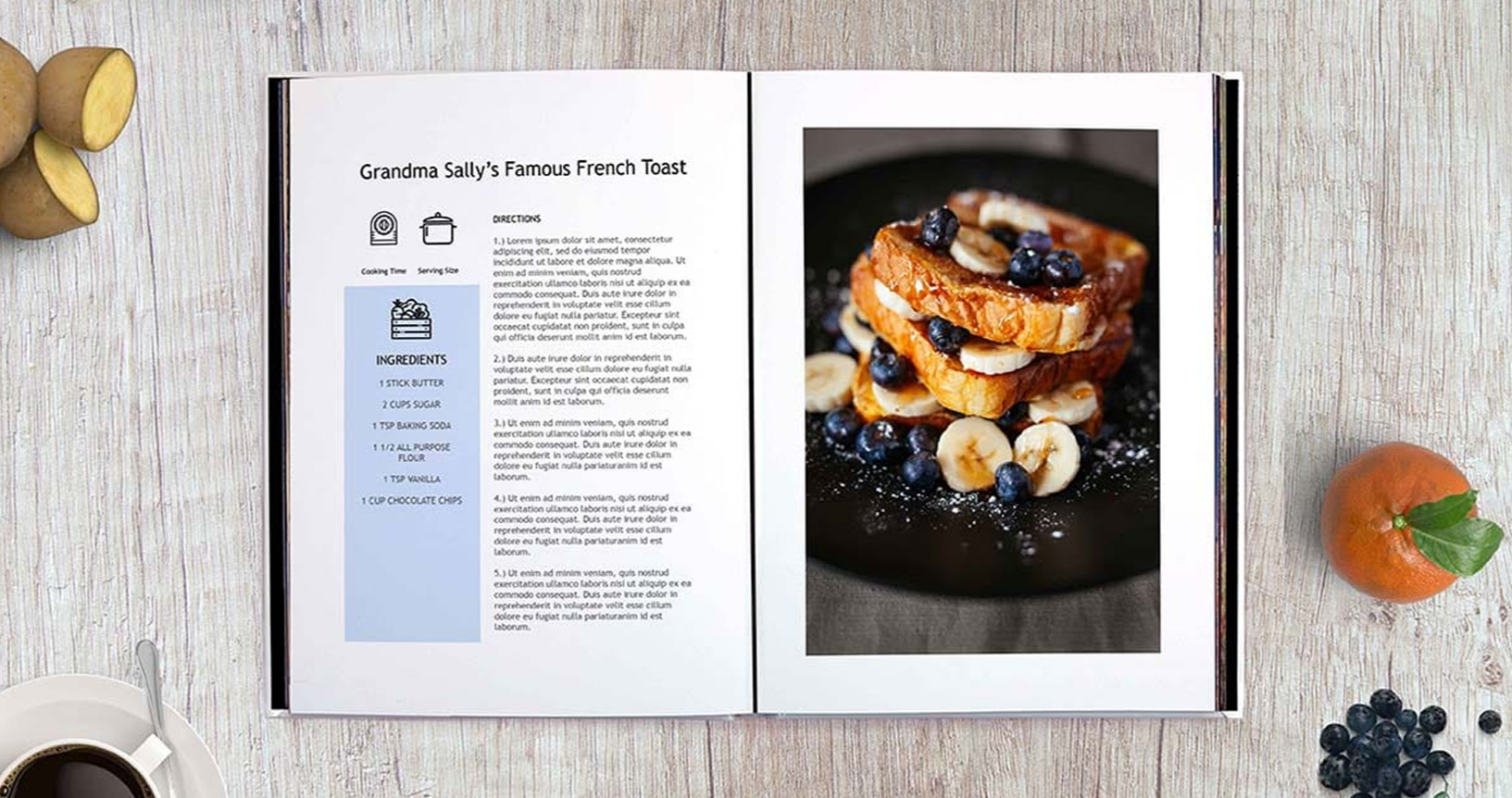
Looking at a cookbook format for students, we’d be able to touch on a variety of topics that would craft a good solution without being unfamiliar. We’d be able to craft content around easy recipes for those unfamiliar with cooking, need to know tips, and even organized information to help with things like time management.
HOW NUTRITION HAS BEEN PROMOTED
Some universities and institutions provide online resources regarding student nutrition. These resources may be in the form of recipes, basic guidelines, and basic information about certain nutrients (mainly macronutrients, see graphics on the right). These resources may be helpful in a pinch, but there are a few issues present:
Many of these resources act as “quick fixes.” Finding a recipe to make may very well help students in the short-term, but this does not have any positive impact on diet consistency, which is just as important as specific food choices.
A vast majority will not be seeking these resources online. If it takes a bit of effort to find them and utilize them, students likely won’t engage with these online resources due to many of the barriers mentioned when discussing context.
CONTENT THAT IS WANTED
Easy to grasp recipes that students can reuse and get creative with
Basic Nutrition tips
Basic Cooking Safety
How to properly store food and know when it goes bad
Awareness of time it takes to cook to craft around a schedule

PROJECTS GOALS
IMMEDIATE
students understand how meal prepping can improve their nutrition while saving time and money.

INTERMEDIATE
students use some of the recipes and principles introduced in the cookbook to improve their lifestyle.

ULTIMATE
students see an improvement in their overall health and lifestyle as a result of consistent diet & nutrition.
PRIMARY RESEARCH: INTERVIEWS
Understand the current state of student’s diets.
Understand what students value most in their diet
Understand the barriers between students and a good diet.
Understand what students need to remove these barriers.
Understand the average student current schedule.
INTERVIEW QUESTIONS
What does your current diet look like?
How varied is your diet?
Do you believe you eat healthy?
Does that matter?
Are you more likely to grab something quick or cook a meal?
How do you take nutrition/cost/time into account when deciding what to eat?
Whats more important?
What foods do you avoid?
How much time do you have each week to cook, if any?
Do you like cooking meals in advance?
If you’ve struggled with keeping a consistent diet, what stopped you from doing so?
KEY TAKEAWAYS
COOKING CONFIDENCE
A common barrier was cooking proficiency and efficiency. Many students see the benefits of meal prepping and a consistent diet, but feel as if they lack the necessary skills to properly cook in bulk efficiently.
How might we simplify meal prepping and help guide users through the process?
RUBBER & MAGIC
Most students that we interviewed stated that they valued time and cost more than nutrition. Some explained that since they’re young, they can afford to eat less nutritious food, but won’t have that privilege when they’re older. Many would prefer to sacrifice nutrition if it means they spend more time “living.”
How might we push students who aren’t concerned with nutrition to achieve a healthy baseline without effecting their lifestyle?
SEEMLESS INTEGRATION
Many students have very busy schedules, and struggle to find the time to cook proper meals for themselves, often reaching for snacks/fast food instead. They may have a few hours to spare on the weekends, but do not want to dedicate that time to cooking due to how time-consuming it can be.
How might we educate students on ways to make cooking/prepping more efficient without sacrificing variety and quality?
CONCEPT IDEATION
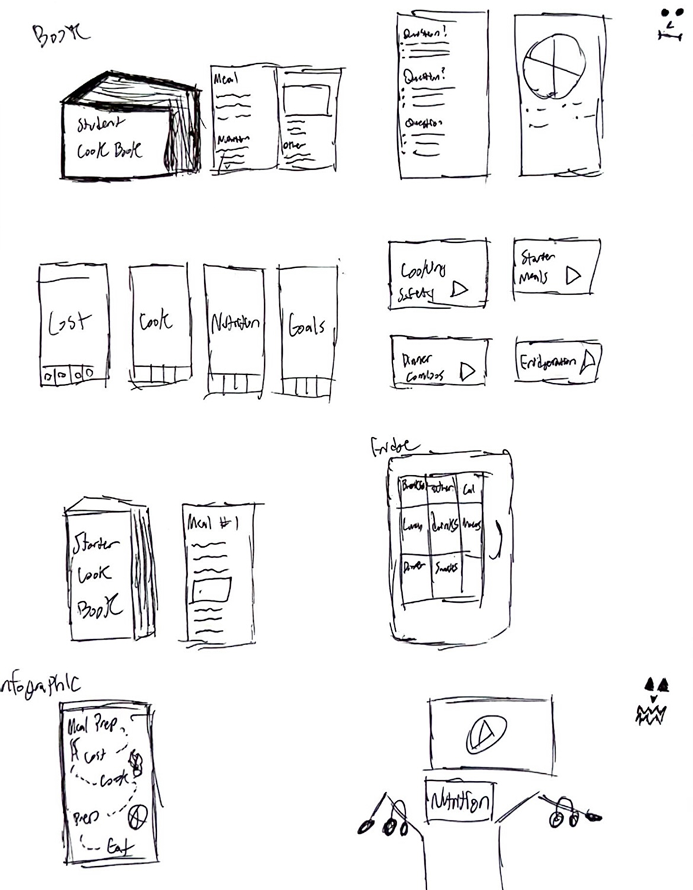
Each person in our group individually came up with a few concept sketches of our own so that way we had a large variation of ideas to pull from. This ranged from doing a whiteboard, meal planning labels, a pamphlet, a cookbook, etc...
CRAZY 8’s
We took each of the concepts we came up with and did some Crazy 8 sessions of sketching each-others ideas to see what would be most feasible to come up with going forward for a possible prototype solution.
IDEA RANKING
Based on our past idea generation and sharing of ideas, we compiled everything into one list to then rank what our top 3 solutions were. Whatever we had most in common would be what we would push towards for a general design solution. We all had a cookbook in our top 3 so that is what we went towards.
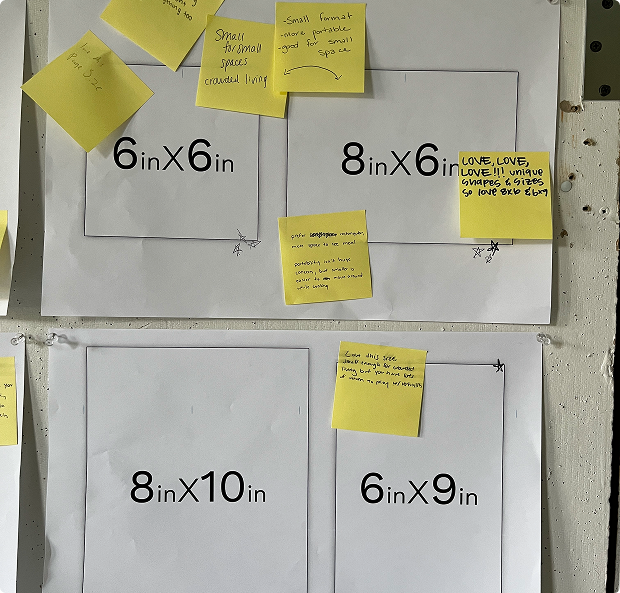
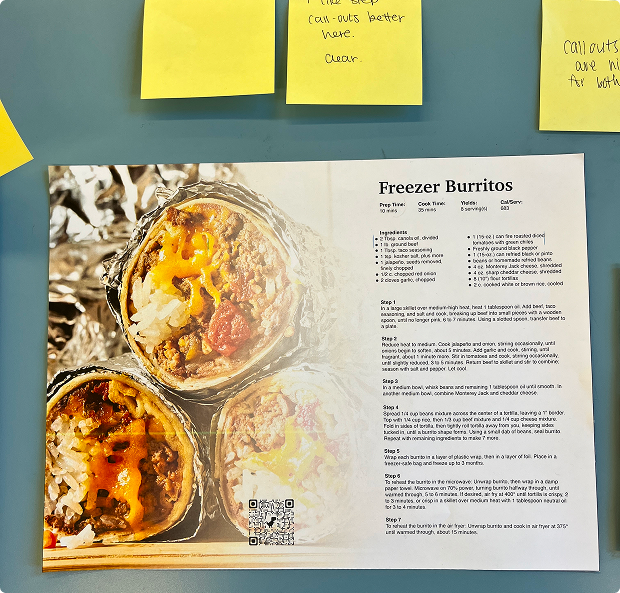
COOKBOOK SPREAD TESTING
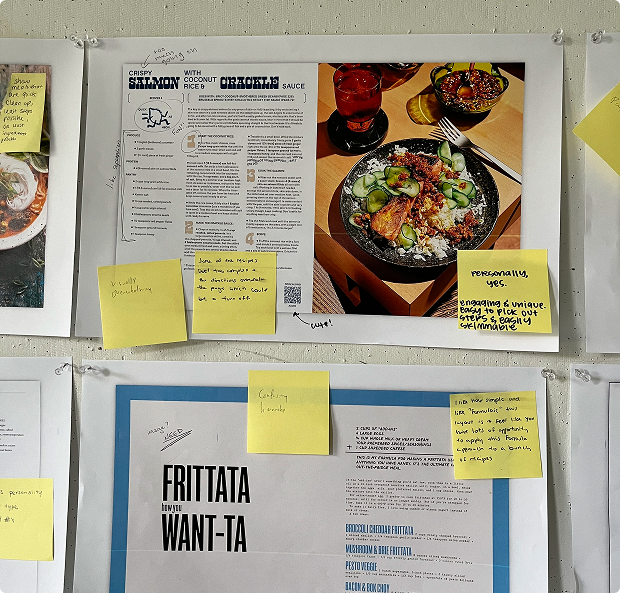
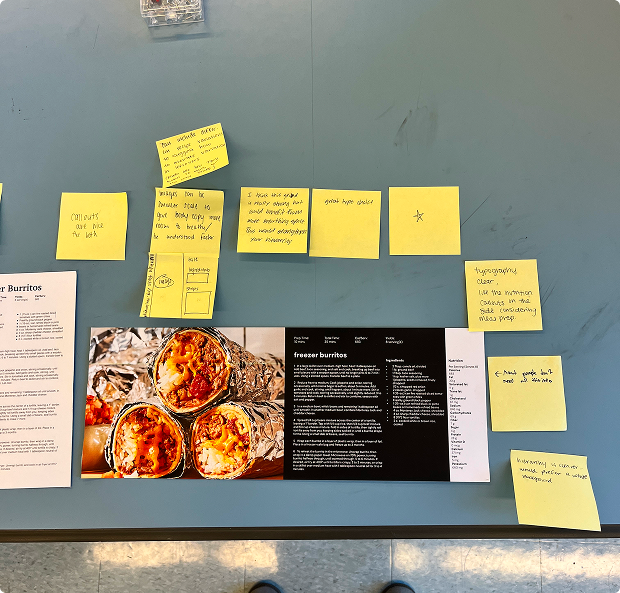
We ran some peer testing sessions where we had our peers go to different cookbook spreads we found online, and different sizes to see what students would like and dislike for a cookbook. This ranged from the type of information, to aesthetics, and to actual layouts of the variety of spreads we presented. Students would go around and directly write on the spreads, or leave a comment utilizing a post-it.
SPREAD APPLICATION AND ADDITIONAL TESTS
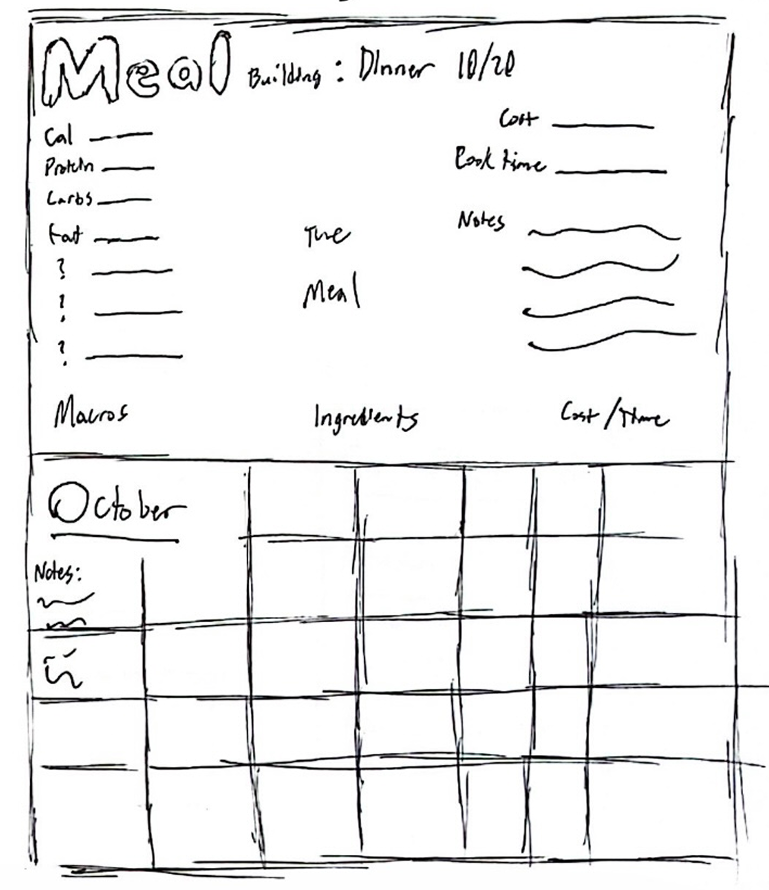
Utilizing the comments made from the original round of testing we took a turn at creating our own rough draft of spreads. Each of us took a turn at creating a spread separately of the same recipe so that way we had three different spreads to test that utilized different elements that our peers liked in our original round of cookbook spreads. We used the same post-it method to pinpoint what was working, and our opportunities for improvement.
PROTOTYPE TESTING
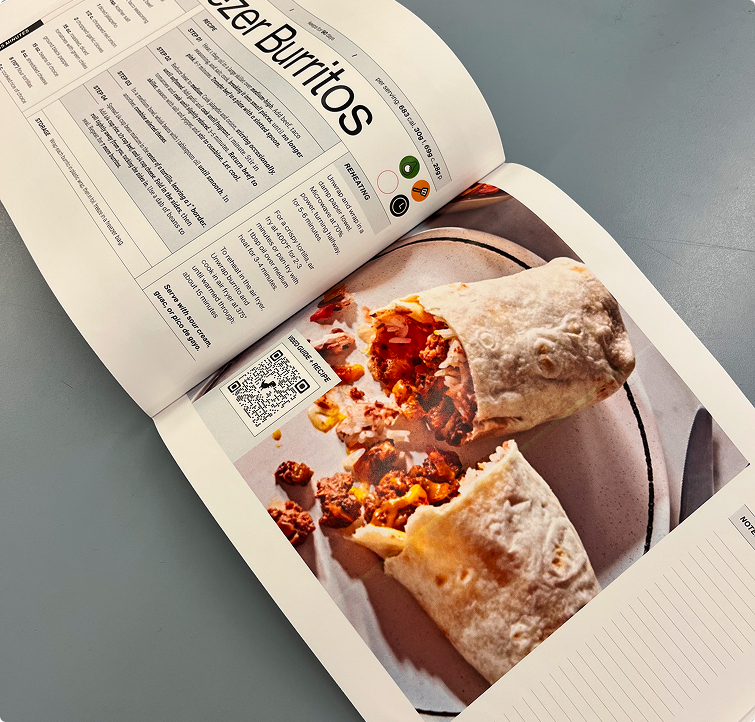
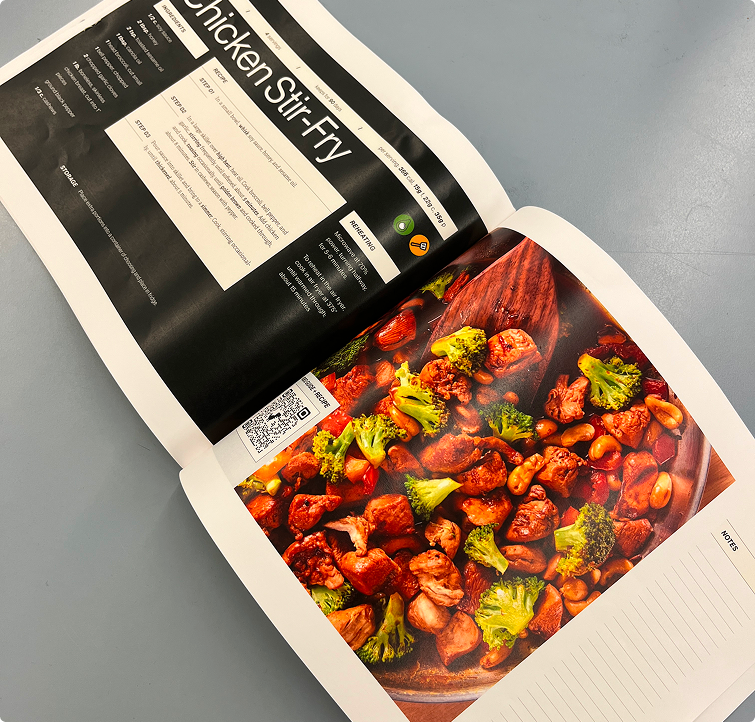
After getting feedback on our spreads we would apply the general aesthetic that people leaned towards the most and create further recipes/iterations based around that aesthetic that still had some slight differences. We also created our physical rough draft prototype of the cookbook so users could flip through it, see our information, and make comments accordingly as we reach towards our end solution.
Gomez, M. Mora, C. Sogari, G. Velez-Argumedo, C. (2018). “College Students and Eating Habits: A Study Using An Ecological Model for Healthy Behavior.” https://pmc.ncbi.nlm.nih.gov/articles/PMC6315356/
“A good nutrition plan can help students maintain or develop a healthy diet while in college.” https://www.davidson.edu/offices-and-services/student-health-and-well-being/nutrition-services/nutrition-tips#:~:text=Try%20lean%20red%20meat%2C%20spinach,follows%20consumption%20of%20refined%20sugar.
Gmuca, S. (2024). “How to Eat Healthy in College: Nutrition Tips and Dining Options.” https://www.stjohns.edu/news-media/johnnies-blog/eat-healthy-in-college-student-life
(2023). “Top 6 Reasons Healthy Food is Important for Students in School.” https://www.shfb.org/impact/blog/top-6-reasons-healthy-food-is-important-for-students-in-school/
(2023). “Top 6 Reasons Healthy Food is Important for Students in School.” https://www.shfb.org/impact/blog/top-6-reasons-healthy-food-is-important-for-students-in-school/
“College students struggle with eating healthy.” https://www.figma.com/board/0LOR25E9pOSo82puUUCuFw/Final-Presentation-%26-Poster-Info?node-id=0-1&t=gBderB0bVVerJLUt-0
Vaiana, D. (2019). “How I Cut My Average Meal Cost to $3.57 by Meal Prepping.” https://collegeinfogeek.com/meal-prep/
“How to Store Meal Prep Food - The Beginner’s Guide.” https://idealnutritionnow.com/blogs/news/how-store-meal-prep-food-beginners-guide
Isaac, T. (2018). “12 Tips That Make Cooking Cleanup Faster & Easier.” https://www.cooksmarts.com/articles/12-tips-to-make-cooking-clean-up-faster-easier/
Roni. (2023). “The Ultimate Guide to Meal Prepping.” https://www.plantoeat.com/blog/2023/01/the-ultimate-guide-to-meal-prepping/
Blanton, K. (2023). “8 Scientific Benefits of Meal Prepping.” https://www.everydayhealth.com/diet-nutrition/scientific-benefits-of-meal-prepping/#:~:text=Prepping%20meals%20ahead%20of%20time,nutrition%20needs%2C%E2%80%9D%20Syn%20says.
CITATIONS
Halsall, A. (2022). “How Do People Meal Prep Around the U.S.?” https://us.myprotein.com/thezone/motivation/how-do-people-meal-prep-around-the-u-s/
Bovasso-Pignataro, A. (2024). “Lifestyle A Beginner’s Guide To Cooking In College.” https://spoonuniversity.com/school/rutgers/a-beginners-guide-to-easy-cooking-in-college/
Eisenpress, C. (2015). “How to Cook in College When You Actually Have a Kitchen.” https://www.bonappetit.com/test-kitchen/primers/article/cooking-college-kitchensrsltid=AfmBOoodWf8b_Uj2Pg1BTgzyarGJoqC3eRYFJX2G65IVecI5wgg1IdTc
Roberts, A. (2024). “College Student Recipes, Cooking Tips, and Hacks for Eating Healthy in the Dorms.” https://thrivemarket.com/blog/college-student-recipes-cooking-tips
“Owning the Kitchen: Basic Cooking Skills.” https:/thejunctionatcollegestation.com/basic-cooking-skills/
Lowder, C. (2024). “These 67 Meal Prep Recipes Help Me Feel Like My Life's In Order (Even When It's Not). https://www.delish.com/cooking/recipe-ideas/g36890133/healthy-meal-prep-recipes utm_source=google&utm_medium=cpc&utm_campaign=mgu_ga_del_md_pmx_hybd_mix_us_18345007169&gad_source=1&gclid=Cj0KCQiA_qG5BhDTARIsAA0UHSLXsewHUZxrOFhVfl8mCTKtO79f1qUUVrXDtghbhkG0WCnnh9ggr5MaAr2UEALw_wcB